
Title: Foraging Seaweed on the Oregon Coast: A Beginner’s Guide
Introduction: Imagine standing ankle-deep in the chilly surf, salty wind in your hair, a basket balanced on your hip, engaging in an ancient marine harvest. Seaweed foraging amidst the rocky shores of Oregon can be a deeply enriching experience. With the mighty Pacific Ocean unfurling its treasures, Oregonians have been quietly harvesting this sea vegetable’s bounty. Let’s dive into this guide and walk you home with a basket full of seaweed.
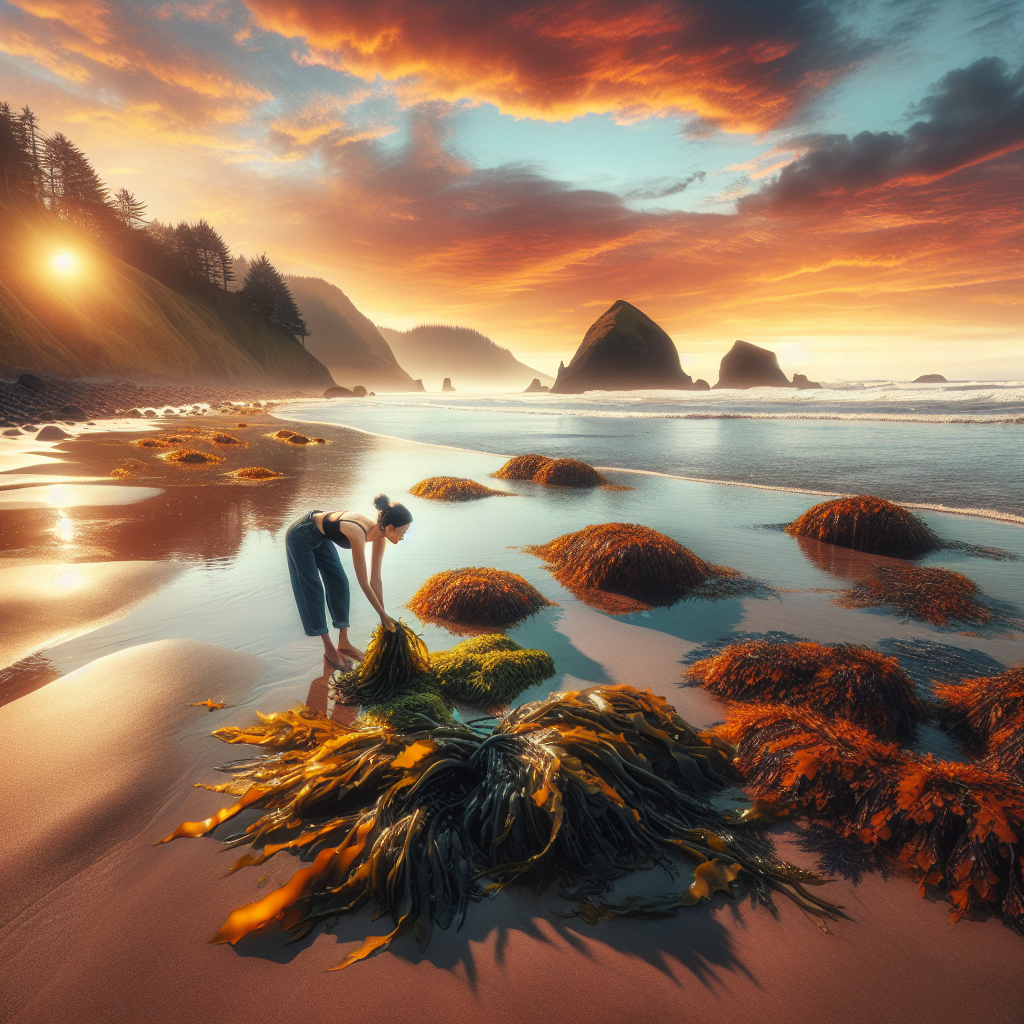
Section I: Know Your Seaweed: Before you set foot on the sandy beaches from Brookings to Astoria, it pays to know what you’re looking for. Not all seaweeds are created equal. Three primary types grace our coastline – red, green, and brown algae. Along the Oregon coast, the brown Bull Kelp and Wakame are prevalent and highly sought after, while the sea lettuce, a green seaweed, is common in tide pools. Fun fact: The beautiful purple Dulse, a red seaweed, can often be found near Proposal Rock at Neskowin Beach.
Section II: Best Foraging Locations: You might think foraging spots are guarded secrets, but the generous Oregon spirit ensures there’s plenty for everyone. Be ready to explore the coastline during low tide. Near Newport, Yaquina Head’s cobble beach is brimming with seaweed diversity. Down south, around Gold Beach, you’ll find sheer abundance. Other popular spots include Oswald West State Park and Cape Falcon Marine Reserve where foraging is respected and managed. Remember, locals tend to care dearly for their coastline, so tread lightly.
Section III: Optimum Time and Tide: The best time to hunt for seaweed is at extreme low tide in cool, overcast conditions, often early morning or late in the day. May through August is considered the prime seaweed season on the Oregon Coast. It coincides beautifully with Oregon’s predominantly sunny summer days, when the coastal weather seems more amenable than its usual moody self. But always remember, our coastal weather can change quickly, so it’s good to pack a jacket and rain gear for the sudden showers.
Section IV: Foraging Ethics and Regulations: Keep in mind, foraging along the Oregon coast isn’t a free-for-all. Make sure to check local regulations or touch base with the nearest ranger station. In general, harvest only what you need and take no more than 10 lbs per person to leave enough for wildlife. Never yank seaweed from rocks but cut only the loose, floating fronds. Always respect the “first one-third” rule – harvest just one-third of any given patch.
Section V: Prepping & Using Your Harvest: Once you have your prized seaweed, rinse it with fresh water and hang it to dry in the sun or in a dehydrator. Done right, it can last up to a year! Incorporate these mineral-rich sea vegetables into a diet routinely. Astoria’s Blue Scorcher Bakery swears by kelp in their whole grain bread for an umami punch, and the local legend says seaweed makes a mean pickling agent for Tillamook cheese.
Conclusion: From trudging through the low tide pools at Oswald West to soaking up the friendly ambiance of Yaquina Head, seaweed foraging becomes more than a pastime—it’s a tangible connection to the Oregon coastline. The vibrancy, the mystery, and the geologic poetry of our shoresmiwcould be the ingredient that brings your table to life. But remember, respect and love for our environment come first. Do it right, tread lightly, enjoy the bounty, and you’ll be warmly welcomed back, season after season. Let your foraging journey open a path to a slower, more connected way of life, dancing to the rhythm of the Oregon coast.