
Introduction to Portland’s Urban Foraging Scene
In the lush, green heart of the Pacific Northwest lies Oregon’s largest city – Portland. Here, urban foraging is not merely a trendy pastime, but a beloved tradition, embracing a lifestyle rooted in sustainability and connectivity with nature. So, grab a basket and let’s start the adventure.
Recognizing Edible Plants in the City
One significant factor in urban foraging is understanding the city’s flora. Among the city’s skyscrapers and rose gardens, edible gems like berries, nuts, and greens are hidden in plain sight.
Strolling down the trails of Forest Park, Morel mushrooms can be found starting in early spring. These gourmet delicacies are highly sought after, so those who know, hit the trails early. In mid-spring, head over to Tualatin River National Wildlife Refuge, where lush patches of Miner’s Lettuce carpet the grounds, offering a refreshing, slightly citrusy addition to your salads. By late summer, Hazelnut trees that line the streets of Nob Hill start to yield their precious nuts.
Harvesting Practices
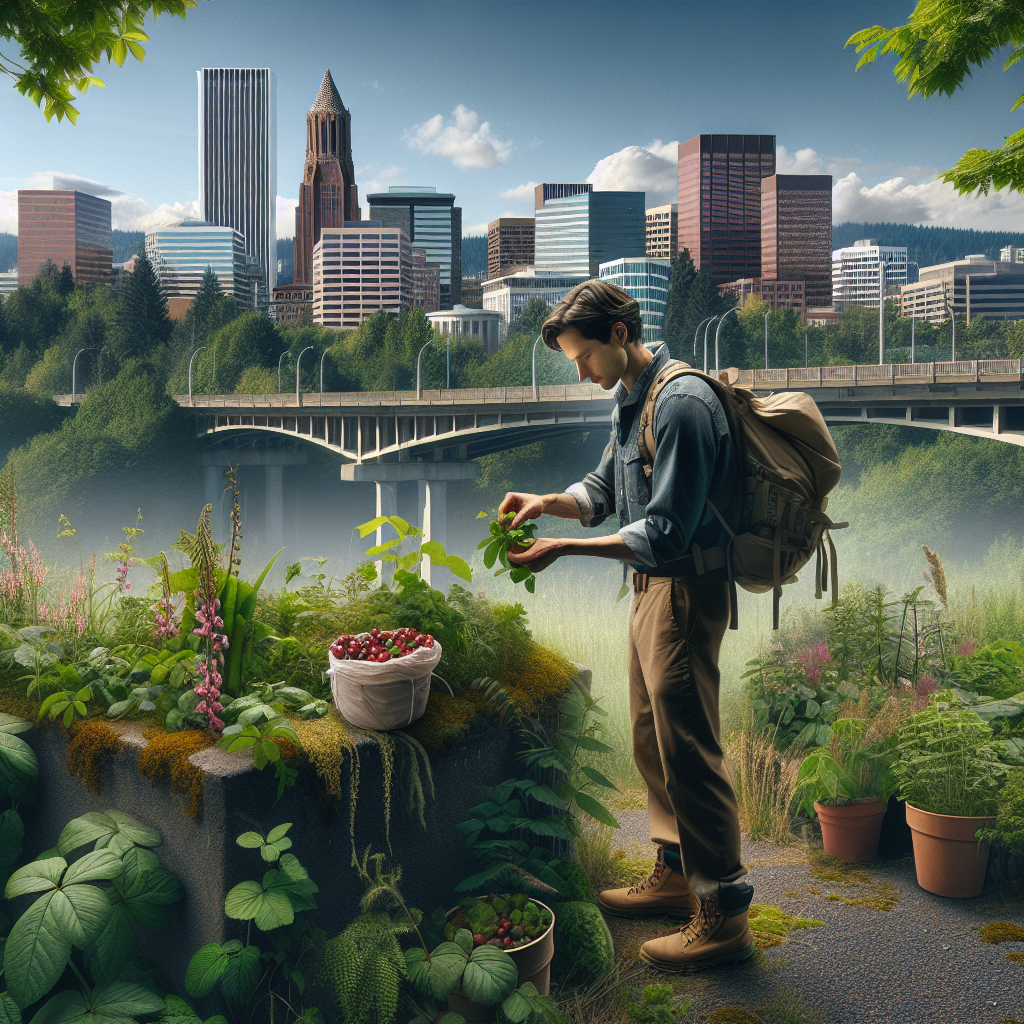
When harvesting edibles, remember to follow fall under the “Leave No Trace” principle. Harvest sustainably, only taking what you need, and leaving enough for the plants to regenerate, as well as for wildlife to thrive on.
The Joys of Seasonal Foraging
With four distinct seasons, Oregon allows for a year-round urban foraging experience. Come spring, look out for Nettles in Washington Park and around Mt. Tabor, while summer brings a bounty of Elderberries, especially around the Waterfront Park area. Be sure to grab several handfuls, they make for delightful jam.
As fall adorns Portland in warm hues, Hawthorn trees heavy with berries and Black Walnut trees can be spotted around Laurelhurst Park. And once winter sets in, head over to Marquam Nature Park for some acorn foraging, a terrific ingredient in hearty winter soups.
The Importance of Plant Identification
Plant identification is key, especially for beginners. For example, there’s a huge difference between the edible Oregon Grape and non-edible poisonous berries. Therefore, it’s a good idea to carry a field guide or even download an identification app on your phone.
Locals’ “Secret Spots”
For Blackberries, locals steer clear of the crowded city parks and instead, explore the Springwater Corridor, which winds its way from downtown Portland to Boring. Down this trail, you’ll find blackberries aplenty during late summer. Just be wary of thorns, as locals have learned the hard way.
Exploring Local Foraging Classes and Workshops
For those more serious about urban foraging, consider joining one of the many local classes offered by Rewild Portland or the Portland Audubon. These workshops provide in-depth knowledge from seasoned foragers and botanist experts, making them well worth the time and investment.
Safety Precautions and Etiquettes
While foraging in a cosmopolitan like Portland is a delight, it comes with a set of precautions and rules. Never consume a plant unless you’re sure of its identity and safe to eat; after all, Portland is home to a fair share of poisonous plants. Avoid picking near busy roadways to escape lead contamination, and always ask permission if the plants are on private property.
Wrapping Up the Foraging Adventure
Brimming with greenspaces and a plethora of edible delights, Portland’s urban foraging offers a unique way to experience and appreciate the city and its connection to nature. So, the next time you venture out on a sunny Oregonian afternoon, remember, your dinner might just be hiding under the next leaf. Welcome to the urban forager’s paradise that is Portland, Oregon.